In brief
In a significant development, EU leaders have agreed to provide Ukraine with a €90 billion loan to assist its economy over the next two years. The decision comes after lengthy discussions, which were complicated by the contentious issue of using frozen Russian assets for this financial support. Ukrainian Prime Minister Yuliya Svyrydenko hailed the arrangement as a crucial step for economic stability, while critics, including Hungary's Viktor Orban, voiced concerns about its implications for prolonging the conflict. The loan will be financed through the EU's capital markets, despite previous support for accessing Russian funds being largely dismissed due to fears of retaliation.
European Union leaders have struck a late-night deal to lend Ukraine €90bn (£79bn; $105bn) over the next two years, following unsuccessful discussions about utilizing frozen Russian assets.
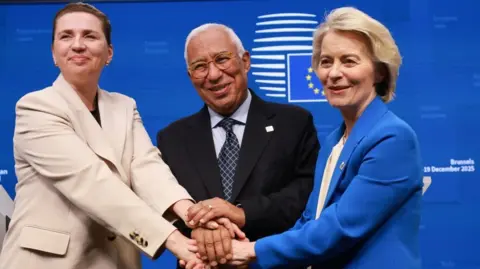
Ukraine was set to run out of cash by next spring, prompting European Council chief António Costa to announce that the loan would be repayable only when Russia compensates for its ongoing war. Costa expressed, We committed, we delivered, while Ukrainian Prime Minister Yuliya Svyrydenko called the agreement a decisive step for economic resilience.
The attempt to access €210bn in Russian money held primarily in Belgium ultimately failed, as Belgian leaders feared potential repercussions from Russia. Costa emphasized the significance of avoiding chaos and division within the EU during the negotiations, which lasted almost 17 hours.
Despite Russian claims of attempted theft, many within the EU viewed the decision as a victory for both Ukraine and financial stability. The funds are to be raised from capital markets, supported by European budget headroom.
Ukraine requires approximately €137bn to maintain both its military funding and public services over the next two years, with this loan covering about two-thirds of that need. Ukrainian President Volodymyr Zelensky has expressed gratitude for the substantial backing from Europe, reinforcing Ukraine's position for forthcoming negotiations.
However, not all EU members supported the measure. Hungary's Viktor Orban and Slovakia's Robert Fico voiced objections against further funding for Ukraine, arguing that it might extend the conflict. Fico specifically declared that the loan would be unsustainable for Ukraine to repay, calling it a loss of funds.
The discussions occurred amid broader tensions, as a Ukrainian delegation planned to meet with U.S. representatives to discuss peace prospects ahead of continued dialogues with Russia. European leaders are now contemplating proposals that include providing robust security guarantees for Ukraine, reflecting on the need for substantial and unified international support amidst a protracted conflict.