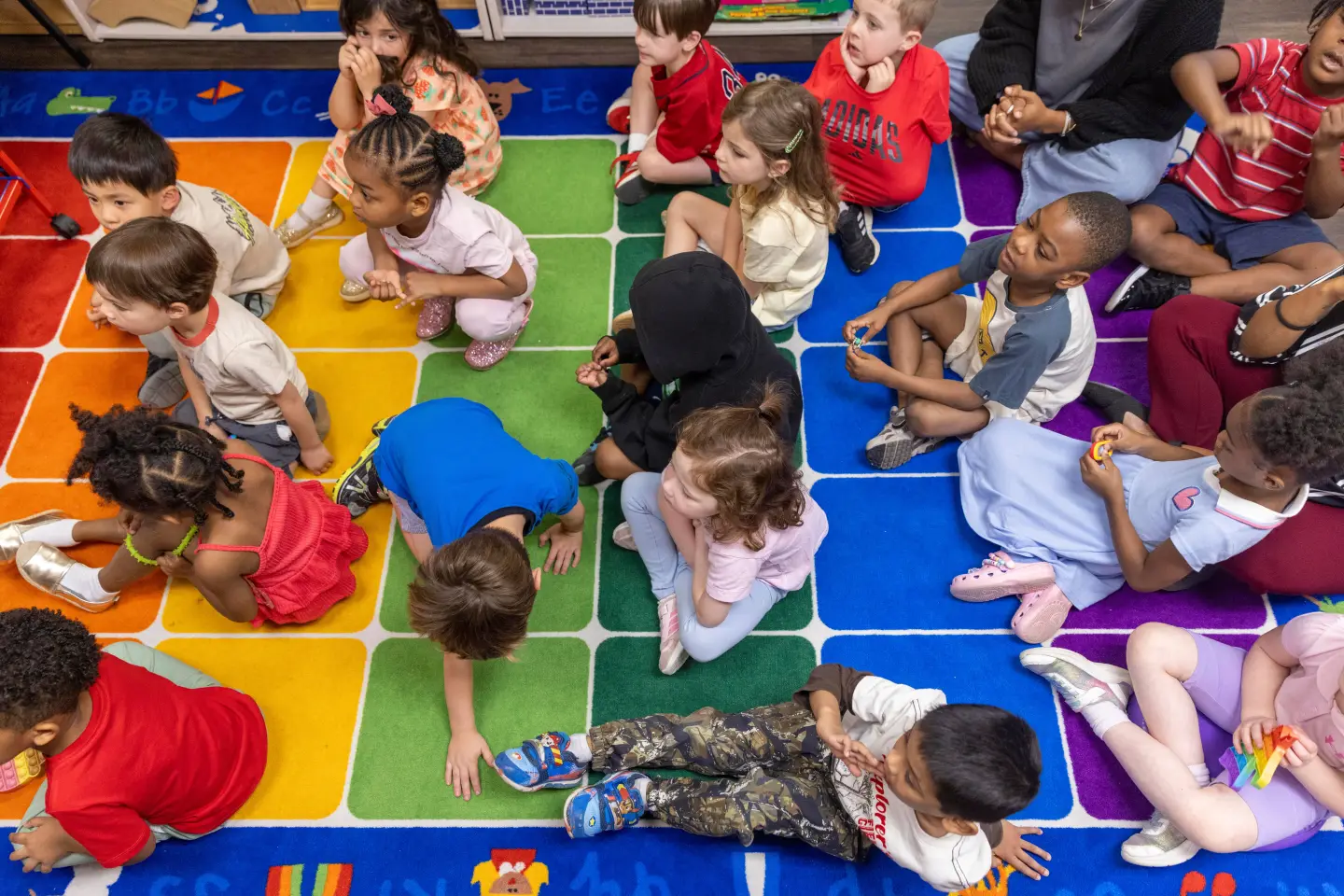
WASHINGTON – Enrollment in state-funded preschool programs has surged to an unprecedented 1.8 million children, accounting for 37% of four-year-olds in the U.S. The National Institute of Early Education Research's annual report highlights that this growth is largely fueled by a record $14.4 billion spending on preschool education.
California has particularly distinguished itself, contributing over 25,000 new enrollments due to its transitional kindergarten (TK) program, which now makes every four-year-old eligible for free public preschool. However, the report cautions that while enrollment numbers rise, the quality of education remains inconsistent, with only two of the ten quality benchmarks being met in the state.
The report compares preschool access across states, likening the effort to a race where some states near completion and others lag significantly behind. For instance, Hawaii boasts a high-quality preschool program yet serves only 10% of its four-year-olds, exemplifying how access does not always equate to high standards of education.
Experts have noted that quality preschool programs significantly affect children's preparedness for kindergarten and future academic success. In contrast, states with fewer resources or policies limiting preschool access can further entrench socio-economic disparities.
Rebecca Ellis, a parent benefiting from Georgia's preschool program, expressed how this has greatly alleviated financial pressure, noting substantial growth in her son’s social and emotional skills. She remarked, They focus so much on just helping kids learn how to calm down, to make friends, to regulate their feelings, to solve problems.\
The report concludes with an urgent call to prioritize preschool funding, arguing that effective early education foundational supports will significantly impact children's future learning and overall development.