In brief
Fifty years after Musa al-Sadr vanished in Libya, a new investigation involving advanced facial recognition technology may finally shed light on his fate. Kassem Hamadé, a journalist, discovered a body in a secret mortuary that some believe could belong to the missing cleric. Despite preliminary findings suggesting a strong resemblance, skepticism remains among Sadr's followers, who maintain that he is still alive. This story explores the complex implications of Sadr's disappearance on Lebanese politics and the Middle East region.
Warning: Contains images some may find upsetting
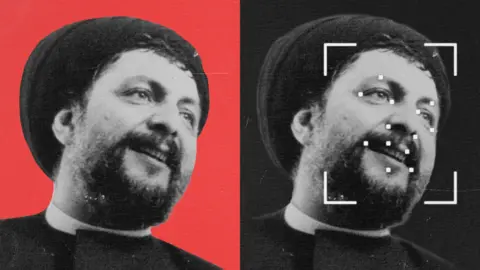
A computer scientist at a university in England is examining an image of a decaying corpse in hopes of solving a 50-year-old mystery involving the disappearance of Musa al-Sadr, a prominent Lebanese cleric who vanished in Libya in 1978. Professor Hassan Ugail from Bradford University is running the digitized photo through an algorithm for analysis.
The original photograph was captured by journalist Kassem Hamadé during the 2011 Libyan uprising, where he was told the body might belong to Sadr. Since then, Sadr’s disappearance has led to countless conspiracy theories regarding whether he was killed or is still alive, similar to the intrigue surrounding John F. Kennedy's assassination.
Regarded as a crucial figure in the Shia community, Sadr had been influential in advocating for marginalized groups in Lebanon. His followers bestowed the title of imam upon him, imbuing his disappearance with mythical significance among Shia Muslims. His absence is thought by some to have significantly affected the political landscape of the Middle East, as he was poised for a critical role as the Iranian revolution unfolded.
The controversial circumstances of Sadr's final days saw him attending scheduled talks with then-Libyan leader Colonel Muammar Gaddafi, only to vanish shortly after. Gaddafi’s regime falsely claimed that Sadr had left for Rome, casting doubt on the truth.
During a 2011 investigation led by Kassem Hamadé, images of the decomposed body emerged, prompting analysis from Professor Ugail's team. Utilizing facial recognition technology, initial tests indicated a strong probability that the body belonged to Sadr. Yet many of his supporters remain convinced of his survival, a belief echoed through the actions of political groups such as the Amal party celebrating the anniversary of his disappearance yearly.
The investigation's complexity intensified when, after acquiring hair follicles from the discovered body, they were reportedly lost, preventing further DNA testing that could confirm or deny the identity of the remains.
Different factions and perspectives emerge from the narrative surrounding Musa al-Sadr, reflecting the intricacies and tensions of Middle Eastern political dynamics. Widespread theories include possible involvement from Iranian hardliners or factions within Gaddafi’s administration that may have sought to eliminate him due to his moderate approach.
This ongoing saga illustrates how the legend of Musa al-Sadr continues to pose questions—questions of identity, belief, and the impact of political actions within a rapidly evolving region.