
In brief
Recent airstrikes by Israel in Lebanon are resulting in significant civilian casualties, especially among children, while first responders navigate the destruction and trauma amidst a military conflict that intensifies by the day. The urgency for humanitarian aid is rising, with families facing dislocation and loss as fierce battles rage between Israel and Hezbollah.
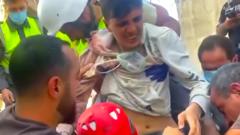
In the Bekaa Valley, eastern Lebanon, routine chaos unfolds in the aftermath of Israeli air strikes. Amid the rubble of an apartment complex in El Karak, Samir El Chekieh, a 32-year-old firefighter and paramedic with the Lebanese Civil Defense Force (CDF), drives an ambulance with sirens blaring. Sleep and meals remain distant memories as he and his colleagues brace for a daily onslaught of mass casualty incidents exacerbated by escalating hostilities with Hezbollah. The current situation starkly contrasts the previous conflict with Israel in 2006. “We didn’t experience this level of airstrikes,” reflects Samir, noting the increasing frequency of attacks that have not only struck military targets but also civilian infrastructure, including fire stations and churches. The toll on civilians, particularly women and children, continues to rise as reported casualties mount.The Israeli military maintains that it is targeting Hezbollah fighters and munitions, claiming to have decimated approximately two-thirds of the group’s missile stockpile. However, Hezbollah remains undeterred, firing daily barrages into Israel.During a two-week assignment in the Bekaa Valley, BBC crews documented an alarming increase in the number of airstrikes, with over 100 strikes recorded in a single day. Official figures report a staggering death toll, revealing that the Lebanese government does not differentiate between fighters and civilians in their estimates. Just days ago, at least 160 individuals lost their lives due to the intensifying air campaign.In El Karak, Samir’s crew arrived to find widespread devastation and thick smoke enveloping the area. Dangerous conditions prompted caution among rescuers as they searched for victims within the collapses. The scene marks a disheartening reality—one first refresher has become who to save rather than how to separate the dead from the wounded.Their grim search yielded survivors, including a 10-year-old girl found alongside a trapped infant boy, Mohammed. As emergency response teams continue to operate under dire conditions, the lack of protective measures and compounded tragedies weigh heavily on the morale of rescuers.Despite their differing backgrounds, members of the CDF work tirelessly, emphasizing their shared humanitarian mission. “We don’t ask the sex, color, or religion of the victims. We are humanitarians,” Samir asserts amid the turmoil.The United Nations has reported disturbing figures during October, estimating that daily, at least one child dies from airstrikes while ten are injured. With the emotional and psychological toll mounting, first responders like Samir cope with increasingly traumatic experiences while facing relentless operations.The ongoing conflict saw Hezbollah responding to Israeli provocations by firing missiles into Israeli territory, while the civilian toll continues to exacerbate. In Khodor, the destruction is stark, with mourning families amidst piles of rubble. Many civilians, like Jawad Hamzeh, have had their lives shattered, losing family members and homes without any indication of military targets in their vicinity.As diplomatic efforts falter, the prospect of a ceasefire fades—displacement is rampant. The recent evacuation of Baalbek represents the largest forced migration since the start of the conflict, with tens of thousands left scrambling for safety as Israel launched extensive strikes. Civilians express their determination to remain despite the danger, reiterating a deep-rooted connection to their land amidst devastation.Among the injured in a local hospital, young children reflect the grievous impacts of the strikes—wounded and orphaned, they serve as a poignant reminder of war's collateral damage. Families endure unthinkable loss, yet some, like Najat Smeha, express resilience and defiance in the face of tragedy: “Death of loved ones is hard, but not harder than getting humiliated. We will hold on to our faith and our traditions until our last breath.”As the aftermath unfolds with the relentless cycle of strikes and retaliatory fire, the humanitarian crisis deepens, underscoring the urgent need for comprehensive dialogue and targeted interventions aimed at civilian safety amidst escalated political tensions.
