
In brief
The investigation into the disappearance of Musa al-Sadr, a prominent Shia cleric missing since 1978, may be nearing resolution following new technological advancements. A team in the UK is employing facial recognition algorithms to analyze a corpse photographed in a clandestine Libyan mortuary, believed by some to be Sadr himself. While many theories regarding his fate persist, emotions run high among his followers, and a potential identification brings renewed hope and controversy.
A computer scientist at a university in the north of England is studying an image of a corpse in an attempt to solve a mystery that has gripped the Middle East for nearly 50 years. This investigation revolves around the missing Shia cleric Musa al-Sadr, who vanished in Libya in 1978.
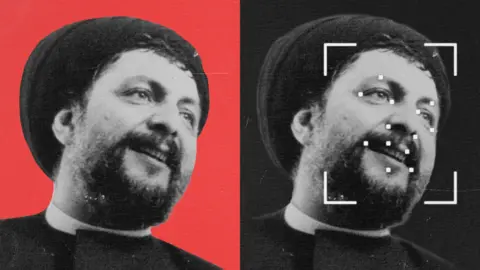
Prof Hassan Ugail from Bradford University is leading an analysis of a digitized photo of a decomposed face, taken by a journalist who saw the body in a secret mortuary in tripoli in 2011. The body was believed to be that of Sadr, who has become a figure of intense speculation among his followers and conspiracy theorists alike.
Sadr’s disappearance is laden with emotional and political implications; revered in Lebanon, he is considered a martyr by many. His followers believe his fate is analogous to that of the "hidden" 12th imam of Shia Islam, who disappeared centuries ago. Some historians speculate that his disappearance altered the trajectory of political movements within the volatile Middle East.
In August 1978, Sadr traveled to Libya on an invitation from Colonel Muammar Gaddafi for discussions, but was never seen again. Subsequently, conflicting narratives arose regarding whether he had been killed or was still alive, hidden away by authorities.
In 2011 during the Libyan uprising, journalist Kassem Hamadé was shown a mortuary containing multiple bodies, where he identified one that matched Sadr's physical description. This body exhibited severe head trauma, prompting speculation about foul play. With the use of an advanced facial recognition algorithm, the comparison of the mortuary image against Sadr’s earlier photographs yielded a high probability match, indicating that the body may indeed belong to Sadr.
However, emotional debates ensue; some, including Sadr’s family and followers, maintain that he is alive. Efforts to validate the body through DNA comparisons have faced bureaucratic hurdles, with critical samples reportedly lost. As the narrative unfolds, each new development rekindles hope and skepticism, positioning the fate of Musa al-Sadr as a pivotal point in contemporary Middle Eastern history.
