
In brief
Marguerite Gnakadé, a former defense minister and sister-in-law of Togo's leader, has been arrested after publicly calling for military support to end decades of family rule. Her arrest follows a wave of protests demanding political reform and the resignation of President Faure Gnassingbé, who has held power since 2005. Gnakadé’s critique of the government represents a significant challenge to the regime, which has resulted in increased tensions and public outcry for justice.
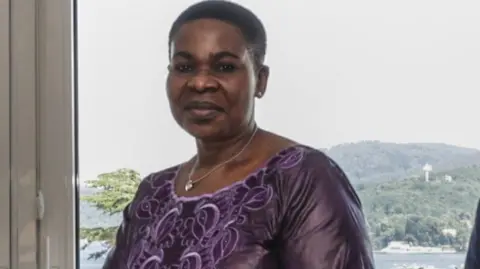
A former defence minister and vocal critic of Togo's government, Marguerite Gnakadé, has been arrested, according to security sources.
Gnakadé, the sister-in-law of long-serving leader Faure Gnassingbé, recently called for his resignation and urged the military to stand with the people in ending decades of dynastic rule.
She was arrested for serious acts, including her recent public appearance inciting the military to rebellion, a police source told the AFP news agency. Local media reported she was arrested by security forces at her home in the capital Lomé on Wednesday.
Togo has recently been gripped by deadly protests calling for Gnassingbé to resign and release political prisoners.
The protests came amid popular anger and growing weariness with a family-run regime that has been in power for six decades. Gnassingbé, who has led the country since 2005, succeeded his father Gnassingbé Éyadéma, who had ruled for 38 years from 1967.
A new constitutional structure that allowed Gnassingbé to prolong his hold in power while shifting to a new role as President of the Council of Ministers further fuelled the protests.
Gnassingbé was in May sworn in to the new position, which is the highest office in the government's executive branch and has no official term limits.
In recent months Gnakadé has written articles criticising Gnassingbé, including calling for him to resign and make way for a peaceful, inclusive, and national transition. She has also supported protests against his leadership.
Gnakadé, a widow of Ernest Gnassingbé, the late elder brother of Faure Gnassingbé, served as defence minister from 2020 to 2022, becoming one of the first women in such a strategic government position.
News of her arrest went viral on social media.
She is currently being questioned by the authorities. Some reports suggest the charges against her are related to alleged connections with exiled opposition figures and attempts to incite disobedience within the armed forces.
These allegations would constitute serious offences if proven, and according to judiciary sources, she could face imprisonment ranging from 10 to 20 years if found guilty.
The coming days are expected to provide more clarity regarding the precise reasons for Gnakadé's arrest.
On Wednesday, a grouping of opposition parties and civil society group, Touche Pas A Ma Constitution (Don't Touch My Constitution), condemned her arrest, saying it was carried out by hooded security officers without a warrant.
Once again, this is an abuse of power that characterises the regime's retrograde practices. The aim is to silence a dissenting voice, it said in a statement.
The group demanded her immediate release without conditions, as well as freedom for all those being detained for their political opinions.
A youth-led movement known as M66 has also given a 72-hour ultimatum demanding her release, warning that they will call for nationwide demonstrations if this is not done.
In June, at least seven people were killed during a crackdown on protests against the Togolese leader, civil rights groups said. The bodies were recovered from rivers in the capital.
The government, however, denied the deaths were linked to the protests.

