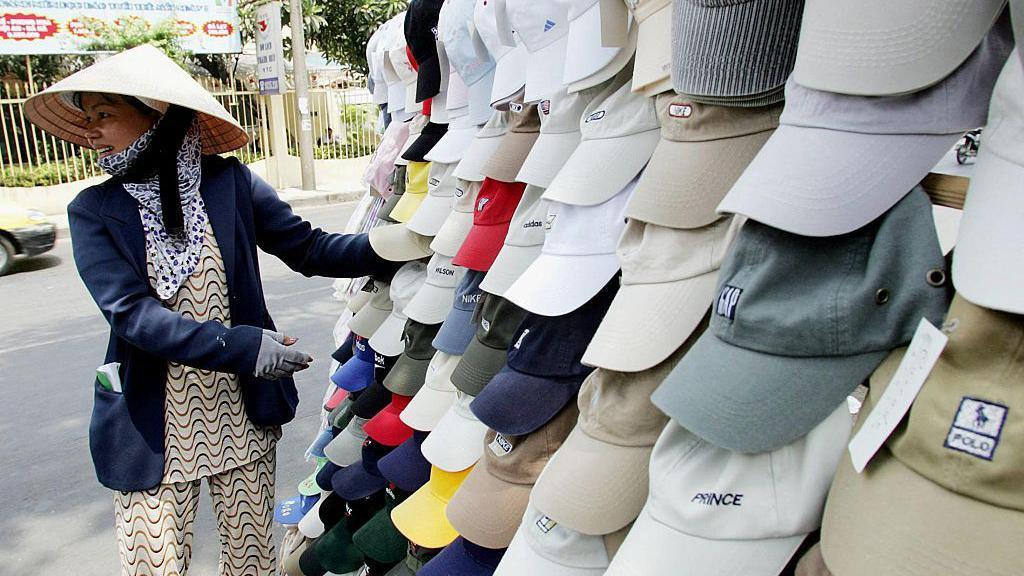
When Vietnam police raided warehouses in Ho Chi Minh City earlier this year, they uncovered more than 23,000 pairs of counterfeit slippers emblazoned with the logos of Nike Adidas Crocs Gucci. The items were pure fakes and not linked to the legitimate brands. The seizure, worth VND 2bn (£57,559; $76,053), fell under a broader crackdown on the black‑market industry that has long thrived in the region.
The same counterfeit goods – marketed for as little as $30 a pair – flood local flea markets 30km from the warehouses. They sit beside faked Chanel handbags Prada t‑shirts, Rolex watches and other tacky replicas, painting a stark picture of Vietnam’s reputation as a global hub for cheap knock‑offs.
Under international scrutiny, Vietnamese authorities said they would increase IP violation busts by at least 20% in May compared to the same period last year, citing a new nationwide crackdown launched on 7 May that targets counterfeit goods, online piracy and trademark infringement.
Responses to the crackdown are mixed. Thanh Truc – a street‑market vendor – notes that although raids happen, “business is still continuing.” She sells counterfeit t‑shirts for $17 that would normally retails at $500. Some traders view the police interventions as a way to clean the market, while others, like local tailor Thi Nguyen, see it as a threat to livelihoods. Nguyen says that customers force her to keep prices low: the market rushes customer to buy cheap fakes, making false goods the only realistic option for the vast majority of locals.
Huy – an office worker and regular buyer of counterfeit soccer shirts – argues that arrests do not solve the problem. “If counterfeit goods cannot be completely stamped out, they remain cheap, convenient and easy to buy,” he says. The crackdown threatens to lock many local consumers out of the market, as 60% of Vietnam’s population lives in rural areas and the average income is only $225 per month.
Academic experts like Thi Thanh Huong Tran point to an economic reality: the desire for affordable luxury drives counterfeit markets. The town’s unique position – close to China where many items are manufactured – helps maintain supply chains for fakes. Tran argues that the market cannot vanish because demand persists, and vendors routinely shift tactics, for instance by slightly altering designs to evade legal authorities while still retaining brand allure.
New actions include police raids in Thanh Hoa province that dismantled a ring selling more than 10,000 fake jewellery items that generated an estimated $1.14m in illicit profits. This proved the government’s determination to clamp down on counterfeit sellers and emphasize a cleaner, more transparent market, even though many local consumers continue to purchase knock‑offs for the money saved.