
In brief
Following an immigration crackdown at a Hyundai battery factory in Georgia, 316 South Korean, alongside other foreign workers, have been released and are being flown back to their home countries. This incident has raised concerns about U.S. immigration policies, prompting South Korea's president to call for reforms to protect overseas labor rights.
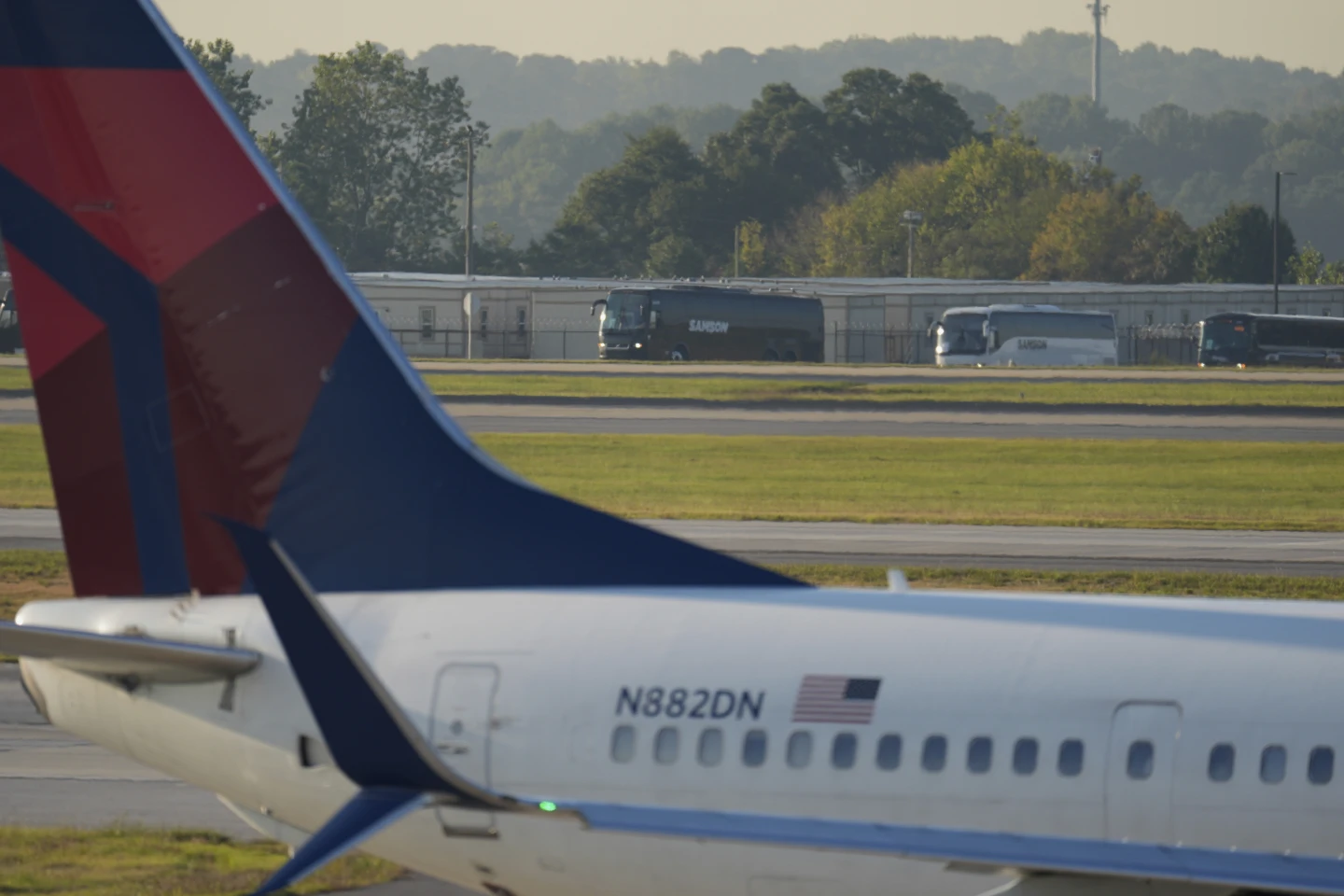
ATLANTA (AP) — Buses carrying South Korean workers detained in an immigration raid are on their way to Atlanta, Georgia, where a charter plane is set to take them home after a tumultuous week.
In total, over 300 Koreans were among approximately 475 workers detained during the immigration raid at a battery factory under construction on the Hyundai campus near Savannah. South Korea's foreign ministry disclosed that a charter flight is scheduled to take these workers back to Korea shortly.
The workers, held at an immigration detention center in Folkston, have gained the attention of South Korea’s government, as officials reported that 316 Koreans, along with 10 Chinese nationals, three Japanese nationals, and one Indonesian were among those released.
South Korean President Lee Jae Myung emphasized the need for improvements to the U.S. visa system, arguing that without substantial reforms, South Korean businesses may think twice about investing in the U.S.
Furthermore, South Korean officials are pursuing measures for a voluntary return of workers to avoid future complications in their eligibility to return to the U.S. The recent raids and the subsequent release of the workers have sparked diplomatic conversations between the U.S. and South Korea, focusing on furthering the workers' rights and safeguarding their future employment chances.
During their discussions, South Korean Foreign Minister Cho Hyun met with U.S. Secretary of State Marco Rubio, expressing the distress caused by the published footage of the arrests. Cho called for efforts to ensure that workers leave without handcuffs and are not subjected to issues in re-entry into the U.S., highlighting the significant emotional ""pains and shocks"" faced by the workers and their families.
