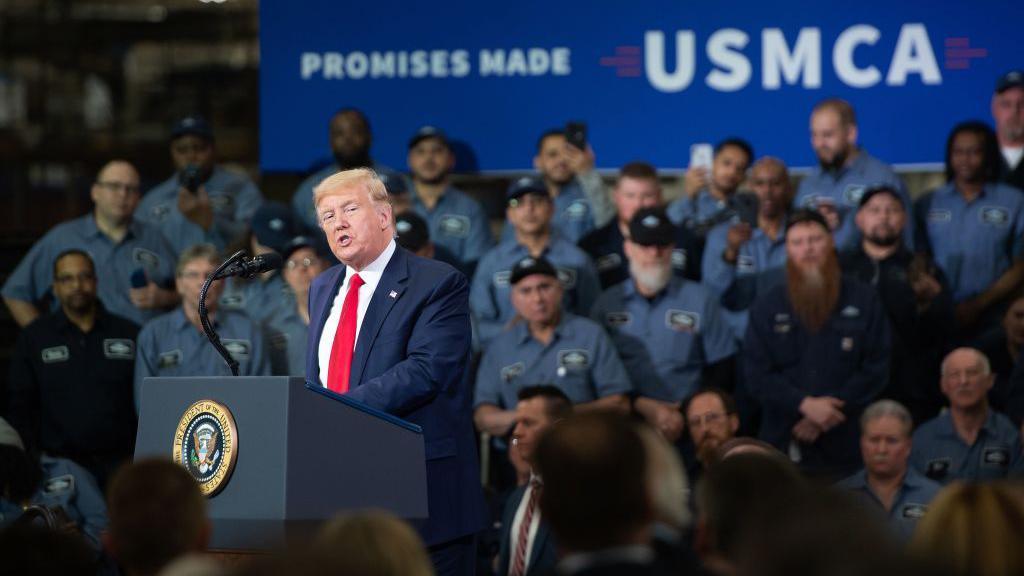
US declares no long‑term renewal of the US‑Mexico‑Canada trade pact
The United States has decided not to extend the US‑Mexico‑Canada Agreement (USMCA) in its current form, a choice that effectively removes the automatically triggered 16‑year “roll‑over” that would have kept the pact active until 2042.
The North American trade deal, which covers exports worth about $2 trillion a year, will now face an annual countdown. Unless Canada and Mexico agree to extend the agreement each year, the pact could reach its natural expiration in 2036. This shift introduces a new layer of uncertainty for businesses that rely on cross‑border assurance.
Officials from Washington framed the decision around unresolved tension points – from rules of origin for vehicles and dairy market access to concerns about external influence, especially from China. They argued that a yearly review process offers them bargaining power to tighten provisions that better serve American interests, a stance welcomed by some domestic trade associations in the steel and manufacturing sectors.
Meanwhile, pro‑extension groups in business circles insist that a multi‑year commitment would stabilize supply chains and protect jobs. The result is a standoff: the US leans toward flexibility, while other stakeholders favour the security of a long‑term agreement.
The USMCA, launched in 2020 to replace the 1994 NAFTA framework, introduced modernized rules on digital commercial transactions, workers’ rights and manufacturing standards – especially demanding that a larger share of vehicle parts be produced within North America. The continued debate on these issues underscores the complex balancing act between domestic industry protection and the principles of free inter‑regional trade.