
In brief
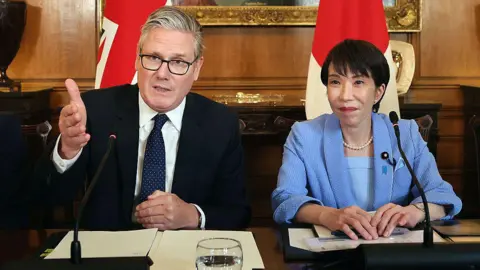
UK Prime Minister Sir Keir Starmer and Japan’s Prime Minister Sanae Takaichi signed a £18 billion deal designed to strengthen bilateral ties through major infrastructure spending, offshore wind investments, and joint research. Japanese firms pledged over £9 billion to UK infrastructure and financial services, and up to £9 billion to offshore wind, creating tens of thousands of jobs. The pact also reaffirms cooperation on the Gcap fighter‑jet programme with Italy and supports a Rolls‑Royce‑Japan partnership for next‑generation nuclear technology and software collaboration. While Downing Street touts the deal as a boost to long‑term growth, analysts warn that the UK economy will remain hit by global tensions, including the US‑Israel‑Iran conflict, and that tax and regulatory hurdles could dampen immediate benefits.
UK Prime Minister Sir Keir Starmer and Japan’s Prime Minister Sanae Takaichi signed a £18 billion investment pact on Sunday in London, calling it a "new era of cooperation" between the two nations.
According to Downing Street, Japanese firms will invest more than £9 billion in UK infrastructure and financial services, and up to £9 billion in offshore wind, creating tens of thousands of jobs over the next five years.
Other parts of the agreement include reaffirming joint work on the Gcap fighter‑jet programme with Italy, and a partnership between Rolls‑Royce and Japan’s Atomic Energy Agency to develop next‑generation nuclear technologies, plus a technology agreement linking UK R&D and software expertise with Japanese manufacturing.
The new deal comes as UK economic growth remains sluggish, with analysts predicting the region to be hit hard by a potential US‑Israel‑Iran conflict, according to the International Monetary Fund. Despite this, the IMF expects the UK to rebound and become the fastest growing European economy next year, albeit at a slightly lower growth rate of 1.3 %.
Opposition leader Andrew Griffith welcomed any investment that could boost jobs, but criticised Labour's policy direction, arguing that tax hikes and rigid red‑tape are damaging the economy and increasing welfare dependency.


