
In brief
In a recent statement, South African Police Minister Firoz Cachalia revealed that the nation's police are currently unable to overcome the growing gang violence that has plagued the Eastern and Western Cape. The minister highlighted the need for new strategies to address increasingly complex criminal networks, as the country struggles with one of the world’s highest homicide rates linked to gang-related activities. Despite efforts such as the establishment of an anti-gang unit, the issue remains deeply entrenched, exacerbated by a significant number of illegal firearms in circulation.
South Africa's Police Minister Firoz Cachalia has said that the security forces are not yet able to defeat deadly criminal gangs, in a stark admission that underscores the scale of the country's crime crisis.
Gang violence, alongside robberies, accounts for many murders in South Africa, which has one of the world's highest homicide rates.
Cachalia said gang violence had become increasingly complex, especially in the Eastern Cape and Western Cape provinces, requiring new strategies beyond traditional policing.
I do not believe that we are currently in a position to defeat these gangs, the minister told journalists on Wednesday.
South Africa, the continent's most industrialised nation, has long struggled with entrenched organised crime.
Many people in South Africa own licensed firearms for personal protection, but there are many more illegal guns in circulation.
Police data shows that an average of 63 people were killed each day between April and September last year.
Speaking after his visit to crime-infested Nelson Mandela Bay in Eastern Cape, Cachalia said criminal gangs were on a killing spree in the two provinces.
We had a discussion about the problem of organised crime in the Eastern Cape, including extortion rackets, gang violence and related issues, said the minister.
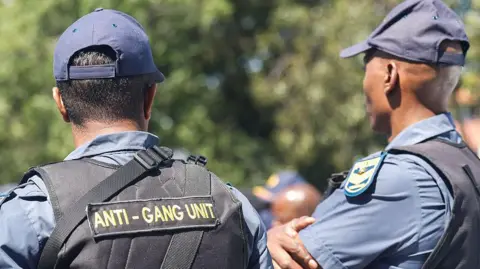
Despite the creation of an anti-gang unit in 2019, Cachalia said gangsters seemed to be winning the war.
Establishing gang units from time to time is an ad hoc response to a growing problem. I really don't think that we should be approaching this matter in a point-scoring way, he added.
His visit comes months after Nelson Mandela Bay was hit by a wave of killings. A deadly spike in violence hit the area in the latter half of last year, leaving 118 people dead between August and December, a local prevention group said. The violence has continued into the new year.
President Cyril Ramaphosa has promised stronger law enforcement action and increased police deployment to tackle the gang violence in the country.

