In brief
In the alpine village of Écône, four priests were ordained as bishops by the Society of Saint Pius X, ignoring Pope Leo XIV’s last‑minute warning that the act was schismatic. The event drew an estimated 15,000 observers and was livestreamed in multiple languages. The society, which rejects post‑Vatican II reforms, has repeatedly clashed with the Vatican over liturgical practices. Pope Leo now threatens to excommunicate the new bishops, but his willingness to act decisively remains uncertain. The ordination highlights deep rifts over church unity, traditionalist identity, and the balance between reform and heritage.
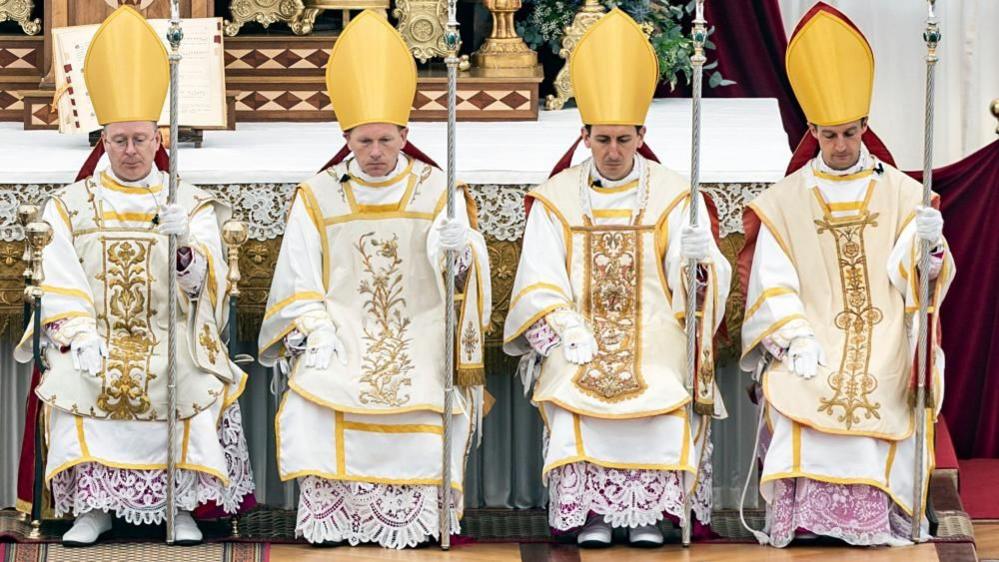
In the alpine village of Écône, Switzerland, thousands gathered to witness the clandestine ordination of four priests as bishops—an act performed by the Society of Saint Pius X (SSPX) despite the Pope’s explicit warning that the ceremony would be “schismatic.”
The society, a traditionalist movement founded by Marcel Lefebvre in 1970, has historically resisted Vatican II reforms such as the use of vernacular languages during Mass. Their insistence on Latin liturgy and other medieval worship practices is seen as a direct challenge to the Church’s modern directives.
Pope Leo XIV was asked to stand aside in the days leading up to the ceremony. In a last‑minute appeal, he described the ordination as a “schismatic act” that could “tear the seamless garment of Christ.” The ceremony went ahead nevertheless, with the priests lining the altar and reciting vows in Latin under an open tent marked by candlelight.
According to Vatican‑era records, the last time SSPX consecrated bishops—in 1988—their titles were immediately nullified, and the clergy was excommunicated. Pope Benedict XVI attempted to heal the rift in 2009, only to fail in restoring the bishops’ standing.
The new bishops, likely attributed to be excommunicated by Pope Leo, face an uncertain future. Their ordination not only violates canonical protocol—requiring the Pope’s assent for episcopal consecrations—but also undermines efforts in the Church to signal unity across its global community.
The controversy illustrates the tension between traditionalist demands for continuity with pre‑modern Catholicism and the Vatican’s intent to foster openness toward various cultures and social issues. Scholars note that even within a Catholic context, many branches exist that appear to adopt a more conservative stance on certain doctrines.
SSPX’s network now spans dozens of countries, including a sizable constituency in Kansas. Its activities are monetized through livestreams and commemorative merchandising, evidenced by the “Écône2026” baseball caps and Swiss wine souvenirs sold on site.
Pope Leo’s remarks to the congregation in Écône highlight a paradox: although he claims love for the Pope as the Church’s head, he is uncomfortable with the sense of defiance from a group that insists its allegiance to Christ must not be eclipsed by “false shepherds.” Whether he will proceed with a formal excommunication remains to be seen, but the event has already magnified tensions within Catholic circles worldwide.