Peru's Election Faces Delay Amid Voting Issues
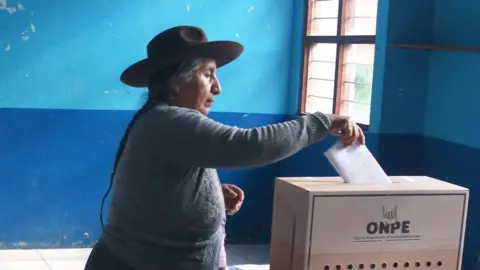
The results of the general election in Peru have been delayed after tens of thousands of people were unable to vote due to technical and logistical problems at a number of polling stations.
The electoral authorities have granted a one-day extension to more than 50,000 voters who could not cast their ballots on Sunday.
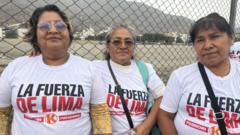
A preliminary count of half the votes that were cast puts conservative candidate Keiko Fujimori slightly ahead of the right-wing former mayor of the capital, Lima, Rafael López Aliaga - but the battle for second place is still very close-run.
All candidates are far short of the 50% of votes needed to win outright, making a run-off between the top two candidates on 7 June almost certain.
Voters who experienced problems in Lima and at polling stations abroad, such as in Orlando, Florida and Paterson, New Jersey, will be able to cast their ballots on Monday, as ruled by the electoral authorities.
Scores of polling stations opened late or did not open at all. Peru's current President José María Balcázar stated that the company hired to deliver the voting material failed to do so in time.
Voting is mandatory for Peruvians aged between 18 and 70, and those failing to cast their vote can incur a fine.
In total, more than 27 million Peruvians were asked to vote for members of both houses of Congress and for a new president, who will replace the 83-year-old Balcázar, in office since February.
Peru's political establishment has been rocked by a series of scandals and impeachments, losing six presidents in the last decade. The last president to complete his term was Ollanta Humala, who served from 2011 to 2016.
The future president must work to rebuild trust in a populace weary of corruption and political instability. Of the 35 candidates running, the electees to the newly re-established Senate, which provides considerable political power, are consequential.
Fujimori, one of the front runners, has made promises to use forceful tactics against rising crime rates, which have escalated.
Voters are eager for candidates to prove effective in addressing corruption, particularly as cases of extortion increase across public transport sectors.