
In brief
Amid the destruction of Gaza, thousands of injured individuals are receiving state-of-the-art prosthetic limbs through a Jordanian initiative using British technology, marking a crucial step towards recovery for many amputees.
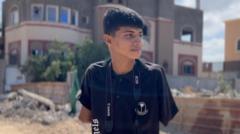
In the aftermath of the ongoing conflict in Gaza, hope emerges as innovative prosthetic technology begins to transform the lives of thousands wounded by violence. Recent reports indicate that many individuals, including those who have lost limbs due to military strikes, are receiving prosthetic limbs manufactured using cutting-edge techniques from Jordanian doctors in collaboration with British firms.Fifteen-year-old Rizeq Tafish, who lost his leg following an Israeli tank attack as he left Friday prayers, expressed profound gratitude as he took his first steps with a new prosthetic limb. "My feelings before were sadness and despair. Now I feel happiness and freedom," he said, reflecting the emotional impact of regaining mobility. According to the World Health Organization (WHO), approximately 94,000 people in Gaza have been injured in the conflict, with over 24,000 suffering from life-altering disabilities, including limb amputations. Access to medical care has become increasingly limited, as only 16 of the 36 healthcare facilities in Gaza are operational. Rehabilitation services are severely disrupted, with essential medical supplies and support equipment like wheelchairs and crutches being alarmingly scarce. Thus, the advent of this new prosthetic program offers a valuable lifeline for many. The Jordanian initiative utilizes innovative technologies that allow for swift production of prosthetic limbs, with fitting processes taking only one to two hours rather than weeks. Lt Abdullah Hamada, a member of the Jordanian army medical team, elaborated on the program's significance, which is supported by both state and charitable funding, costing around $1,400 per limb. Children, including sisters Hanan and Misk, have also fallen victims to the devastating impacts of the conflict. Both girls sustained severe injuries in an airstrike that claimed their mother's life. Their aunt struggles to provide answers to their questions about their lost limbs, illustrating the deep emotional scars left by the violence.Another young victim, Diya al-Adini, reflects on his lost aspirations as a photographer after losing his arms in an airstrike on a coffee shop. Despite this setback, he maintains an optimistic outlook. "I am trying to plan a good future so that after I get prosthetics, I can work hard and excel to become a famous photographer,” he explained, showcasing resilience in the face of unimaginable challenges.For Rizeq Tafish, receiving his new prosthetic leg represents a renewal of hope for himself and his family. "I could go back to my job or get a different one now that I have my new limb," he stated, embracing the returning joy and potential that comes with mobility. He is one of many in Gaza navigating the complexities of recovery from severe disabilities. As he moves forward, Rizeq's story serves as a testament to the radical changes that new medical technologies can bring in the darkest of times.
