
In brief
In a significant event of international concern, Russian drones violated Polish airspace, leading to an urgent military response and governmental meetings in Warsaw. Although Russia downplayed the incident, labeling it unintentional, European officials contest this narrative, suggesting a deliberate provocation. As NATO grapples with the implications, experts debate the motives behind this airspace breach while calls for a robust defense response gain momentum. With the geopolitical landscape at a crossroads, the incident may test the resolve of NATO allies, especially if tensions escalate further.
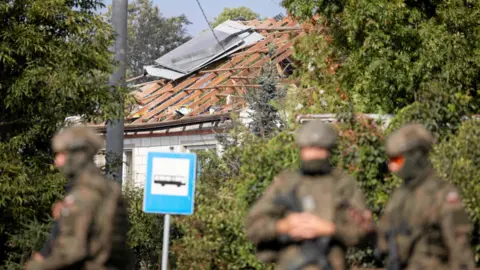
Wednesday morning's incursion of Russian drones into Polish airspace led to jets being scrambled and an emergency government meeting being called, raising concerns that Europe and NATO's resolve against Moscow may not withstand the test.
Poland's Prime Minister Donald Tusk stated that Polish airspace was violated 19 times, with at least three drones shot down by Warsaw's jets, supported by Dutch F-35s and an Italian early warning aircraft.
In response to accusations from Western officials, Russia contested that the incursion was deliberate while halting just short of denying the drones had trespassed. 'No objects on Polish territory were planned to be targeted,' Moscow stated.
However, European officials have firmly rejected the notion that this act might have been unintentional. Boris Pistorius, Germany's Defence Minister, declared, 'There is no evidence whatsoever that this amount of drones flew over this route over Polish territory by accident,' while Italy's Defence Minister called the events a 'deliberate attack' aimed at testing NATO's reactions.
Although Poland has seen several violations of its airspace since the onset of the conflict in Ukraine, this latest event sparked significant apprehension in Warsaw. Tusk highlighted that Poland is at its closest point to open conflict since World War Two, urging the invocation of Article 4 of the NATO treaty for discussions about security threats.
Expert opinions vary regarding the motivations behind the drone incursions. Some analysts propose that the drones, potentially conducting reconnaissance, accidentally entered Polish airspace due to misnavigation. Dr. Marina Miron from Kings College London suggested GPS spoofing could be a factor, advocating caution against premature conclusions.
Conversely, further analysis indicates that the scale of the drone incursions reflects deliberate Russian strategy. Justin Bronk from the defense think tank Rusi pointed out that previous incursions were small and more easily explained by malfunctions.
As Poland assesses the incident's implications and discusses findings with NATO allies, the broader geopolitical environment remains precarious. Signals of weakness or insufficient responses from NATO could embolden further Russian aggression, making this scenario a pivotal chapter in the ongoing conflict.
With the United States observing closely, responses from both sides will dictate future actions in the region, illustrating the delicate balance of power and the ongoing battle for security in Europe.
