
In brief
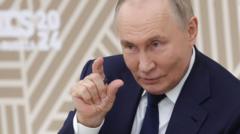
As tensions heighten over sanctions and geopolitical isolation, President Vladimir Putin’s hosting of the Brics summit illustrates Russia's efforts to showcase its alliances and counter Western narratives.
In the face of significant international isolation due to its ongoing military actions in Ukraine, the Kremlin is positioning itself strategically by organizing a summit in Kazan, bringing together more than 20 heads of state from emerging economies. Among the attendees are prominent leaders such as Xi Jinping of China, Indian Prime Minister Narendra Modi, and Iranian President Masoud Pezeshkian. This summit is touted by the Kremlin as potentially the "largest-scale foreign policy event ever" in Russia, symbolizing the resilience of Russia against mounting pressure from the West.Strategically, this gathering serves to convey a message that attempts to isolate Russia through sanctions have been ineffective. Chris Weafer of Macro-Advisory stated, "The clear message is that attempts to isolate Russia have failed," suggesting that the Kremlin aims to portray a united front amongst allies in the face of adversity. Countries associated with the Brics—Brazil, Russia, India, China, and South Africa—now encompass a wider array of developing nations, driving home their collective economic clout, which represents about 45% of the global population and holds a combined economic value exceeding $28.5 trillion.However, the summit's objectives reach beyond mere optics. There is a significant push within Russia for Brics nations to explore alternatives to the US dollar in international trade, a motivation driven by the pressures of Western sanctions. Weafer indicated that much of the economic turbulence in Russia surrounds cross-border trade, heavily reliant on the US dollar, and breaking this dependence is crucial for the Kremlin. The hope is for Brics to develop an independent trade and settlement system, reducing reliance on currencies dominated by the G7.Despite the ambitions, the Brics coalition is not free from internal challenges. Differing priorities among member states raise questions about the possibility of cohesive action. As noted by Jim O’Neill, former Chief Economist of Goldman Sachs, significant economic cooperation between China and India is hindered by their rivalry, and there are ongoing tensions between Egypt and Ethiopia as well as Iran and Saudi Arabia in the broader regional context. This diversity often complicates unified decision-making, leading some analysts to view the coalition's efforts as overly optimistic.Thus, while Putin aims to project strength and unity, navigating the complexities of diverse national agendas among Brics members will be a crucial element of the summit’s outcomes. Moreover, the challenge remains for Russia to convince its allies and the world that their stance against Western sanctions is more than a superficial display. The Kazan summit is expected to be a litmus test for the coalition's ability to present a solid front against Western economic pressures while managing deep-seated internal differences. In an era where international relations are increasingly defined by rivalry and competition, the success of this summit may depend less on agreements forged and more on the narrative it crafts about Russia’s place in a changing global landscape.
