
In brief
Borneo’s summer wildfires forced conservationists to relocate eight orangutans—three mothers with their daughters and two adult males—to a protected reserve. The animals, rescued from forests destroyed by the strongest El Niño‑related blaze on record, have been re‑released as their original habitats have become uninhabitable. The move underscores the compounded threats to orangutans from climate change, expanding oil palm plantations and land‑clearing practices. Conservation groups warn that without significant mitigation, future fires could wipe out large portions of the species’ remaining range.
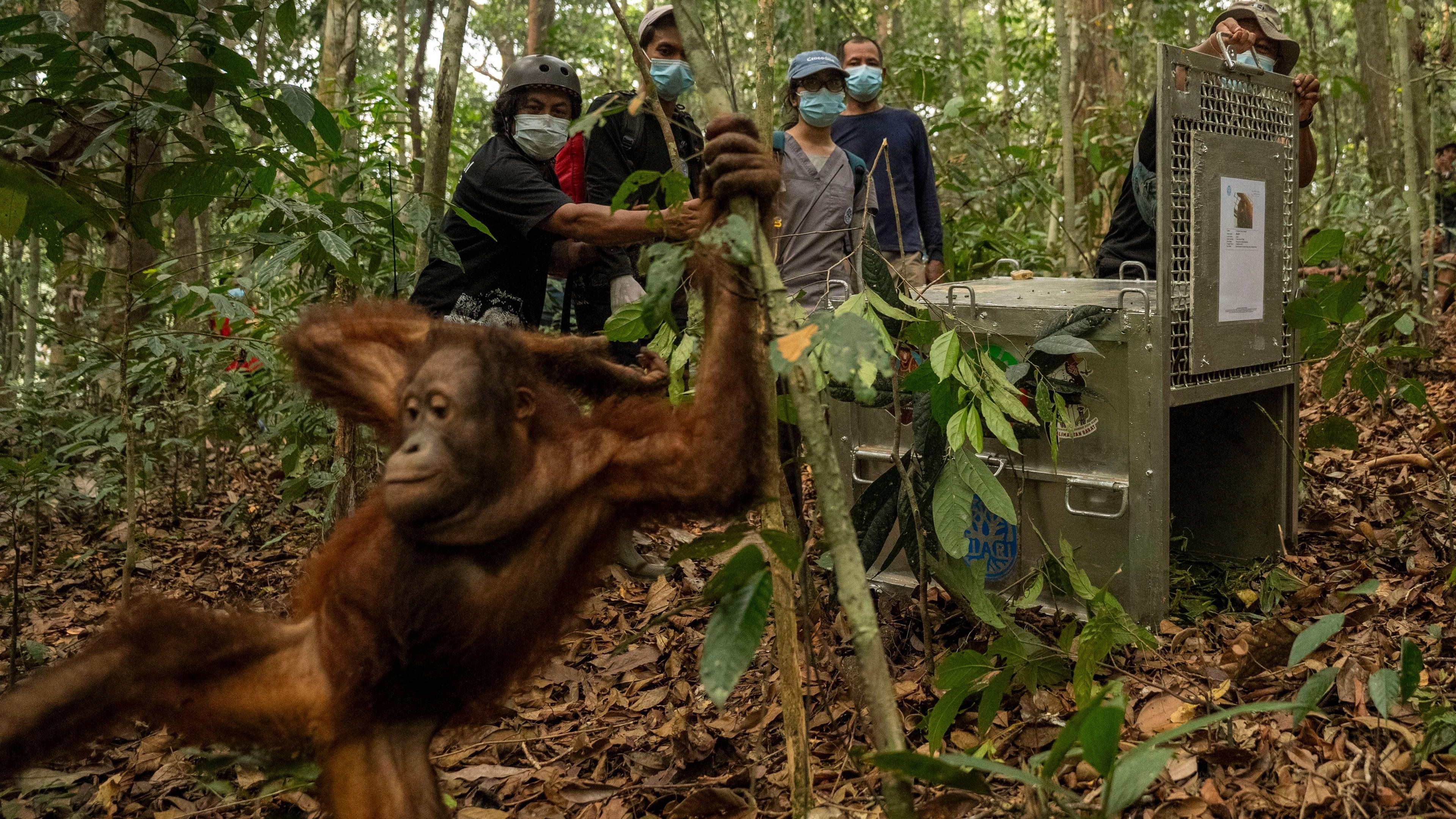
In the waning days of a summer that saw record‑breaking fires across Southeast Asia, conservationists freed eight critically endangered orangutans from a temporary holding facility and released them into a conservation reserve on Borneo’s western coast.
The group included three mothers, their daughters and two adult males—all rescued after their homes were scorched by August and September blazes that intensified under a powerful El Niño. The fires eliminated large patches of low‑land forest, driving the apes into oil palm fields and leaving them with limited food and escalating danger from human encroachment.
According to the Ministry of Forestry and the International Animal Rescue Indonesia (Yiari), the reserve was selected for its plentiful water, diverse food sources and connectivity to other forest patches, giving the orangutans the best chance to recover in the wild.
Scientists note that over 50 % of Borneo’s orangutan population now lives in areas where wildfires are common. Climate scientists link the recent fire season to rising temperatures and drier conditions caused by El Niño, while others point to forest clearing for agriculture as a key driver that makes the land more flammable.
Yiari CEO Karmele Llano Sanchez said the relocation was a “necessary step” because the animals could no longer thrive in their original habitats. The move is being monitored closely, with researchers hoping the reintroduction will serve as a model for balancing human land use and wildlife conservation in fire‑prone regions.


