In brief
In light of significant unrest in Nepal following the dissolution of parliament last week, major political parties have united in calling for the reinstatement of the House of Representatives. This dissolution, executed by President Ram Chandra Poudel, was a reaction to protests demanding accountability and reforms from the government. The call for reinstatement reflects constitutional concerns as well as the ongoing pressures from public protests incited by a prior ban on social media. Transitioning leadership under newly-appointed Interim Prime Minister Sushila Karki presents new challenges that include restoring public order and addressing the demands of the youth-led protest movement.
Nepal's major political parties have demanded the country's President Ram Chandra Poudel reinstates the parliament he dissolved following deadly anti-corruption protests.
In a statement, eight parties - including the Nepali Congress, CPN-UML and Maoist Centre - said the president acted unconstitutionally.
Poudel dissolved the House of Representatives on Friday upon the recommendation of newly-appointed interim Prime Minister Sushila Karki - it was also a key demand from the protest movement.
More than 50 people were killed in clashes with riot police during this week's mass protests sparked by a ban on social media platforms. Karki was appointed after a deal was reached with protest leaders.
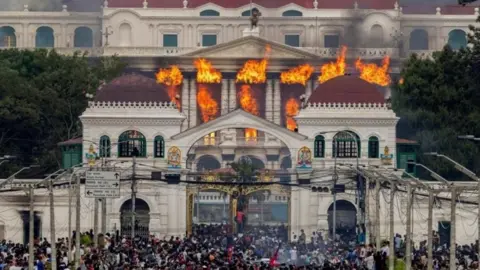
The ban was lifted on Monday - but by then the protests had swelled into a mass movement, with angry crowds setting fire to parliament and government buildings in the capital Kathmandu on Tuesday, leading to then-Prime Minister KP Sharma Oli's resignation.
Saturday's statement demanding the reinstatement of the parliament was signed by the chief whips of the eight political parties. They argued the step taken by the president was unconstitutional and against the precedents set by Nepal's judiciary.
The dissolution of the parliament was a major demand by student leaders from the so-called Gen Z protest movement. However, the eight parties assert that the protesters' demands—including new elections announced for 5 March next year—should be addressed through an institution elected by the populace.
President Poudel is yet to publicly respond to the political parties' statement. Karki, a 73-year-old former Supreme Court chief justice and the first woman to lead the impoverished nation, is expected to appoint ministers to her cabinet within a few days.
Her cabinet will face numerous challenges, including restoring law and order, reconstructing parliament and other key buildings that were attacked, and reassuring the Gen Z protesters who want change—alongside those in Nepal who fear a derailment of the young democracy and constitutional order.
Another key task will be to bring those responsible for the violence to justice. Nepal is gradually returning to normalcy after what has been described as the worst unrest in decades.
The protests were initially sparked by the government's decision to ban 26 social media platforms, including WhatsApp, Instagram, and Facebook, but quickly expanded into widespread discontent with the political elite. A campaign highlighting the lavish lifestyles of politicians' children had resurfaced allegations of corruption in the weeks prior to the ban.
While the social media ban was hastily lifted on Monday night, the protests had gained unstoppable momentum by that stage.