
In brief
The reintroduction of martial law under President Yoon Suk Yeol upends decades of democratic progress, igniting protests and reviving painful memories of past military crackdowns.
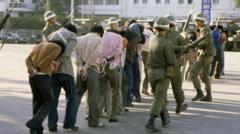
In April 2023, South Korean President Yoon Suk Yeol declared martial law for the first time in 45 years, igniting fierce backlash from citizens who recall the nation’s traumatic history with authoritarian governance. The imposition aimed to quell perceived "pro-North anti-state" elements but left many questioning its legitimacy, particularly in a democracy that has grown deeply cherished since the late 20th century.Koh Jae-hak, an 87-year-old witness to previous martial law instances, vividly recalls a harrowing April day in 1960 when soldiers opened fire on peaceful protesters demanding the resignation of dictator Syngman Rhee. "There were demonstrations from various universities...that’s when shots were fired," he recounted. This day etched a painful memory in the collective consciousness of a country that has seen 16 martial law declarations in its early democratic struggles.Despite South Korea’s status as a democratic beacon in Asia today, the scars of military rule linger. Yoon’s recent decision, perceived as a move to suppress dissent, evoked deep fears among the populace, mirroring sentiments from tumultuous past eras. As troops responded to his orders, ordinary citizens held protests, obstructing soldiers attempting to enforce the order. In the face of threats to civil liberties, lawmakers quickly mobilized to curtail martial law, reflecting an urgency to protect democratic norms.The public was initially thrown into confusion. Yoon’s vague claims of a North Korean threat were viewed with skepticism. He provided no evidence to substantiate his assertions. “We don't want to repeat the same thing over and over,” lamented Kelly Kim, a 53-year-old environmental activist, who fears the consequences of revoking basic freedoms: “The government would control all the media... that’s really horrible.”Past instances of martial law were often wielded as justifications for repression, particularly during moments of political unrest. The 1980 Gwangju massacre remains a dark chapter, where scores of citizens were killed when the military responded to student protests calling for democracy.However, the narrative on martial law is not entirely one of condemnation. Some older citizens, like Kang Hyo-san, 83, view past measures as necessary for stability against communism. “When the military intervened, the situation would stabilize,” he argued, suggesting that previous martial law actions, compared to others globally, did not aim for indiscriminate violence.Yet, in a reiteration of South Korea’s matured understanding of democracy, both Koh and Kim express relief that the recent martial law was swiftly challenged and rolled back. The country’s creative industries, flourishing in the years since the last martial law, have brought historical narratives back to life, ensuring the past's lessons are not forgotten.As a new generation of South Koreans grapples with Yoon’s declaration, fears resurface. Many younger citizens, unfamiliar with prior authoritarianism, still hear the echoes of their parents' stories of terror and trauma. The rapid mobilization against Yoon highlights a commitment to protect hard-fought democratic freedoms—freedoms many had never taken for granted. The divisive perspectives underline a broader societal rift over how to interpret South Korea’s tumultuous past. While the overwhelming majority cherish democracy, perspectives about the necessity of martial law split along generational lines, demonstrating how history can produce vastly different interpretations shaped by personal experience. Ultimately, the march toward freedom continues as South Koreans rally to preserve their democratic ethos against the haunting specter of their past. "Without democracy and freedom of living, what is life?" questioned Kim, encapsulating a sentiment shared by countless others who refuse to let history repeat itself.
