In brief
President Trump has signed an executive order to permit TikTok to function in the U.S. while addressing national security concerns. The U.S. government pressures ByteDance, TikTok's parent company, to divest its stakes to local investors, including Oracle. While the new deal aims to minimize risks related to data security, the impact of potential changes in TikTok's algorithm and ownership remains to be seen alongside its significance in U.S.-China relations.
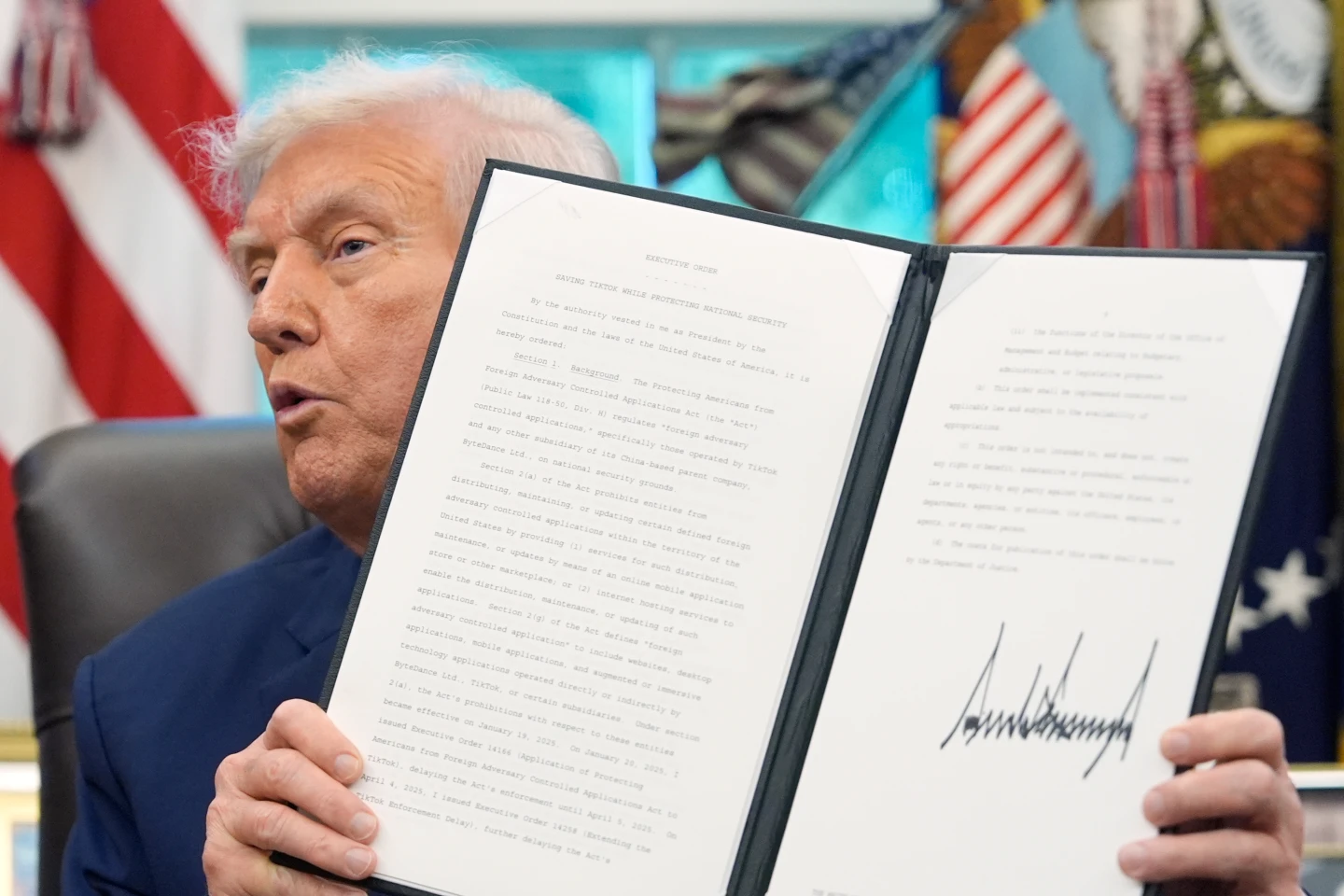
President Donald Trump has signed an executive order aimed at allowing the popular social media platform TikTok to continue operations in the United States while adequately addressing national security concerns that have emerged over its Chinese ownership. This marks a significant development as the former administration had previously sought to ban the app unless it divested from its Chinese parent company, ByteDance.
President Joe Biden had previously enacted legislation mandating ByteDance to sell TikTok's operations by early this year. However, Trump’s recent executive order opens the door for TikTok to negotiate a proposal that adheres to the security guidelines stipulated by the U.S. government.
Despite the lack of detailed information on the specifics of the deal, Trump has claimed that it has received the approval from Chinese leader Xi Jinping. However, there has been no immediate confirmation from the Chinese embassy in Washington regarding this assertion.
A recent Pew Research Center report indicates that nearly 43% of American adults under 30 utilize TikTok for news consumption, surpassing the engagement metrics of other social media platforms including YouTube, Facebook, and Instagram. This demographic dependency on TikTok adds pressure on U.S. policymakers to navigate the platform's future carefully.
The framework of the proposed U.S. deal suggests TikTok may be spun off into a new joint venture owned by a consortium of American investors, notably Oracle, with plans for U.S. ownership making up roughly 80% of the new entity, while ByteDance retains a minority stake. This representation, however, raises concerns about potential political influences, especially as several key investors have close ties to Trump.
Trump's shift in attitude toward TikTok comes as he acknowledges its influential role in reaching younger voters, relevant for his re-election campaign. The ongoing apprehensions about security arise from fears that TikTok’s recommendation algorithm could be manipulated by Chinese authorities, although no substantive evidence has been presented to validate these claims.
Moreover, ongoing trade tensions have prompted a reevaluation of this situation, with some observers noting that a successful TikTok deal could influence broader diplomatic negotiations between the U.S. and China.
As the situation unfolds, the implications of this executive order raise questions about the future of TikTok's operation in America and the extent to which it will diverge from its global counterparts, potentially defining the app's cultural interaction with U.S. users.